

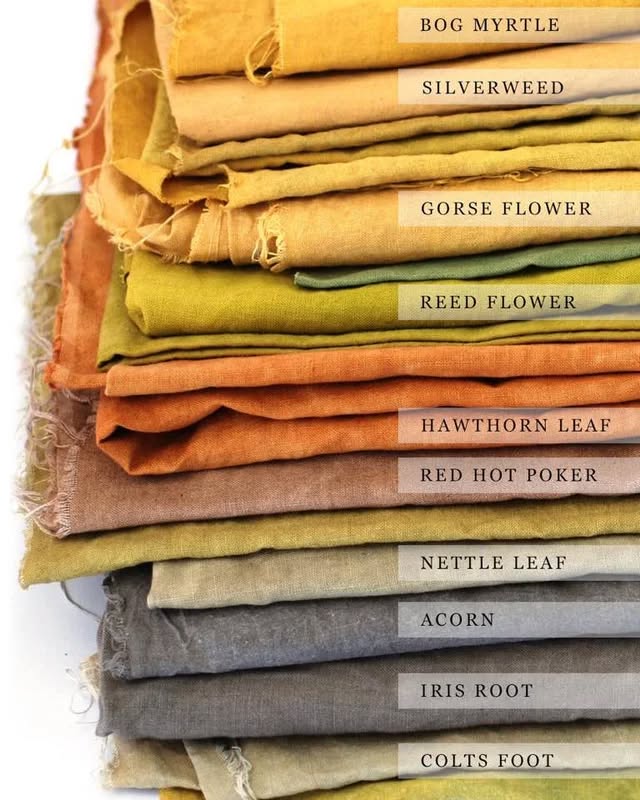
This is a palette of natural plant-based dyes.
Plant-based dyes offer a rich palette of vibrant, deep, and eco-friendly shades. The final color of the fabric depends not only on the plant itself, but also on the type of fiber (silk, wool, cotton), as well as on the use of mordants.
Primary colors and their plant sources:
Red and pink: madder roots, berries (blackberries, raspberries), avocado pits and skins (yield a soft pink).
Orange: onion skins, turmeric, cosmos and marigold flowers.
Yellow: marigold flowers, dyer’s chamomile, tansy, rhubarb. Green: spinach leaves, nettles, pine needles, artichoke leaves.
Blue and purple: indigo plants (indigofera, woad), blueberries, red cabbage. Brown and beige: walnut shells, oak bark, chaga, strong tea, and coffee.
How to set the color on fabricNatural pigments wash out easily without prior preparation. To ensure the color sets firmly, mordants are used: Potassium alum is the safest and most popular mordant, preserving the brightness of the color. Iron sulfate “darkens” or “mutes” shades, turning yellow into olive and pink into gray. Vinegar and salt—used as simple homemade fixatives for fruit and vegetable dyes.