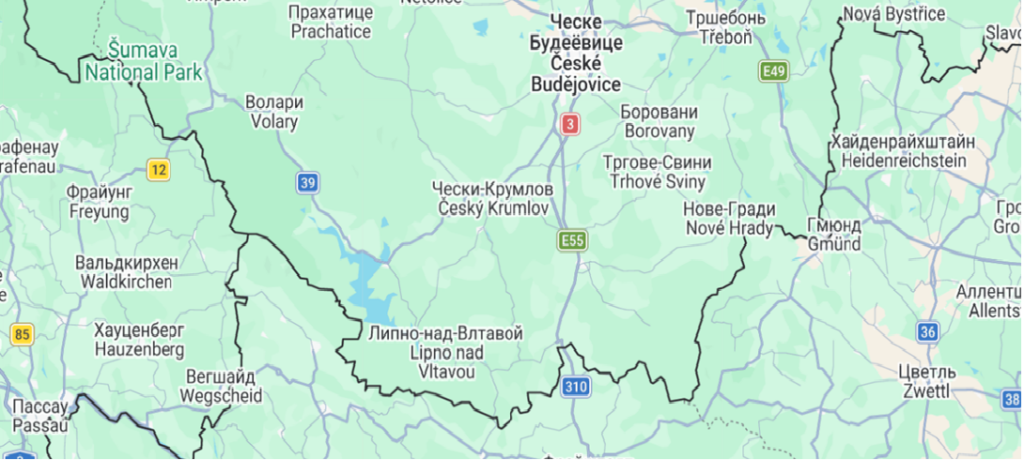
Location of the first eco-city project in Europe
Europe is currently regarded as one of the most balanced and promising regions for the creation of eco-cities, as it is here that a developed institutional environment, a high level of environmental awareness, and sustainable economic models capable of supporting long-term sustainable development projects come together.
Unlike many other parts of the world, European countries have already integrated eco-friendly standards into urban planning, energy, and agriculture, creating a favorable foundation for implementing new types of projects focused on self-sufficiency, a low carbon footprint, and harmonious coexistence with the natural environment.
At the same time, Europe boasts a dense network of research centers, technology clusters, and educational institutions, providing access to the expertise and innovations necessary to create a fully-fledged eco-city.
From a social perspective, Europe is characterized by a high level of stability, a well-developed healthcare and education system, and a culture of citizen participation in public initiatives, all of which are particularly important for building sustainable communities. The political environment in most European countries is predictable and transparent, and legal systems ensure the protection of investments and long-term projects.
Economically, the region remains one of the world’s largest markets, with access to financing, grant programs, and green investments aimed at supporting environmental initiatives.
At the same time, as climate change intensifies, Europe is actively adapting its policies, making eco-settlement projects part of strategic development rather than niche experiments.
Within Europe, Eastern Europe offers the optimal combination of opportunities and resources for implementing such projects, as it maintains a balance between land availability and the level of infrastructure development.
Unlike Western Europe, where land costs and building density significantly limit large-scale projects, Eastern European countries offer more flexible conditions that allow for the creation of integrated ecosystems with sufficient space for agriculture, energy self-sufficiency, and integration with nature.
The region’s economy is showing steady growth, and costs for construction, labor, and maintenance are significantly lower, which enhances the investment efficiency of projects.
Socially, Eastern Europe is characterized by a high level of education, strong engineering traditions, and a growing interest in eco-friendly and alternative lifestyles, which creates a favorable environment for attracting residents and professionals. The political situation in several countries in the region is stable and oriented toward integration with pan-European standards, while bureaucratic procedures are often less complex and more flexible compared to their Western European counterparts.
Land costs in Eastern Europe remain one of the key competitive advantages, enabling the implementation of large-scale projects with a long-term planning horizon.
Among the countries of Eastern Europe, the Czech Republic stands out as the most balanced and strategically advantageous jurisdiction for establishing an eco-city. A key factor is its geographic location in the very heart of Europe, on the continental part of the continent, as far inland as possible from the coast, which reduces the impact of oceanic climate fluctuations and extreme weather events.
Given the intensifying El Niño phenomenon, which is already being linked to an increase in the frequency of droughts, temperature anomalies, and climate system instability for years to come the Czech Republic’s inland continental position becomes a significant advantage, ensuring more predictable and stable climatic conditions.
An additional factor contributing to this stability is the country’s natural protection by mountain ranges, which form a natural barrier against sudden atmospheric fronts and contribute to a milder and more stable climate compared to coastal countries, which are prone to storms, high humidity, and rapid climate changes.
Economically, the Czech Republic demonstrates stable growth, a well-developed industrial and technological base, as well as access to European markets and investments. The social environment is characterized by a high quality of life, well-developed infrastructure, and safety, making the country attractive for long-term residence.
The Czech Republic’s political system is transparent and predictable, and its legal framework supports investment and the development of new types of settlements, including eco-friendly projects.
Although bureaucratic procedures require careful handling, they remain more manageable compared to those in a number of Western countries, and the existence of clear regulations makes it possible to develop long-term strategies without significant risks.
Land prices in the Czech Republic, especially outside major cities, remain moderate, creating opportunities to acquire large tracts of land for comprehensive development.
In this context, the Lipno Lake region represents the most optimal location within the Czech Republic, combining natural, climatic, and infrastructural advantages. This area is characterized by its ecological purity, low building density, and rich natural landscape, including forests, water resources, and agricultural land, which creates ideal conditions for the formation of a self-sustaining ecosystem.
The presence of a body of water provides additional resilience in the face of potential droughts, which are intensifying against the backdrop of global climate change and the El Niño phenomenon.
Socially, the Lipno region is developing as a hub for sustainable tourism and environmental initiatives, fostering a positive attitude toward projects of this kind. Economically, the region remains affordable in terms of land costs and operating expenses, while offering sufficient transportation access to major cities and international destinations.
It is also important to note that Lake Lipno is located near the borders of Germany and Austria, which makes it accessible to future visitors to the eco-city.
Politically, the region falls under the stable jurisdiction of the Czech Republic, and local authorities have demonstrated an interest in developing environmental and innovative projects.
Thus, the combination of European institutional stability, Eastern European resource availability, the Czech Republic’s central location, and the unique natural conditions of the Lipno Lake region forms a comprehensive foundation for creating a new-generation eco-city capable not only of adapting to the challenges of the future, including climate change, but also of setting standards for sustainable development for decades to come.
map of the region